

How to Recognize Early Onset Dementia
Noticing changes in a loved one’s memory or behavior before age 65 may lead to questions about early onset dementia. While not common, it can also impact individuals in their 40s, 50s, and early 60s.
This guide will define early onset dementia, who it impacts, and how to spot early warning signs.
Signs and Symptoms of Early Onset Dementia
Early onset dementia symptoms often start subtly and can be easily mistaken for stress or typical aging. However, the key difference is that dementia symptoms gradually worsen and interfere with daily life.
Example: It is normal to occasionally forget a name or misplace keys. However, early onset Alzheimer’s symptoms are more persistent. For instance, a person with typical aging may retrace their steps to find keys; a person with dementia might put those keys in the refrigerator and have no memory of doing so.
Common signs of early onset dementia include:
- Memory Loss Disrupting Daily Life- Forgetting recently learned information or asking the same question multiple times.
- Difficulty Planning or Problem-Solving- Struggling to follow a familiar recipe or manage a monthly budget.
- Confusion with Time or Place- Losing track of dates or getting lost in familiar locations.
- Trouble Finding the Right Words- Difficulty holding a conversation or struggling to remember words.
- Mood and Personality Changes- Becoming unusually withdrawn, anxious, or irritable, especially in social situations.
How to Test for Early Onset Dementia
If you are concerned, don’t rely on guesswork. A doctor will use a combination of medical history, cognitive assessments, blood tests, and brain scans to reach a formal diagnosis.
When to Get Help
The best time to seek help is as soon as consistent changes are noticed. Early diagnosis allows for better treatment options, more time to plan for the future, and immediate access to support systems.At Avalon, memory care is our sole focus. We provide a compassionate, home-like environment specifically tailored to the needs of those living with Alzheimer’s and other cognitive impairments. Use our Free 5-Minute Memory Assessment Tool to better understand your loved one’s needs or Schedule a Tour at one of our 25+ locations today.



See More Articles
- Visiting Your Aging Parent With Memory Loss at Avalon Memory Care

As a loving son or daughter, you naturally want the best of care for your senior parent. The compassionate assisted living caregivers at Avalon Memory Care want you to know that while your parent is living with us, he or she will receive nothing less than respectful, loving care within our comfortable, safe, and fully-staffed
- Celebrating New Year’s Day in Memory Care

Families often find that celebrations with their loved ones in memory care are easier when they embrace new traditions. For instance, it may not be practical to expect your loved one to stay up until midnight on New Year’s Eve. Instead, consider throwing a New Year’s Day celebration, complete with a countdown to the first
- Understanding Parkinson’s Disease and Dementia

Parkinson’s disease is an incurable neurological disorder, with progressively worsening complications. Perhaps the most well-known symptom of Parkinson’s is a hand tremor, but it can also cause speech changes, muscle rigidity, and impaired posture. Eventually, as the disease progresses, more than half of all individuals with Parkinson’s will require dementia care. This particular type of
Our team is committed to delivering personalized care for your loved one
Michelle Strong
All Star Hospice
Christian Care House Calls
Testimonials
Carol Rup
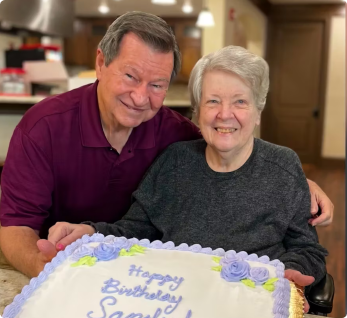
Jim Howard
Greg and Cindy Heitzman
Downloadable Resources
We Are Avalon
Discover the heart of our community; download ‘We Are Avalon’ to get to know our dedicated team and our commitment to providing a warm, family-like environment.
Transitional Care Guide
If you’re considering a transition, we’re here to help; download our Transitional Care Guide for compassionate guidance through each step of the process.
Schedule a Tour
Visit one of our 30+ campuses and experience our unique approach to memory care.