
How Dementia Is Diagnosed And How to Find the Best Care for Your Loved One
When a loved one starts showing signs of memory loss or confusion, deciding what to do next can feel overwhelming. For families beginning to navigate this situation, it is important to understand how dementia is diagnosed, what the process looks like, and how to find the right care once you have clarity.
Early diagnosis matters for several reasons. It gives families more time to plan, explore care options, and make decisions while the individual can still actively participate. It also opens the door to treatments that may slow the progression of symptoms and improve quality of life.
The guide below unpacks the diagnostic journey, outlines the tools clinicians use, and provides direction to families as they navigate care decisions.
What are the Early Signs of Dementia?
Before a formal diagnosis, families often notice subtle changes. Some of the most common early signs include:
- Memory loss that disrupts daily life, such as forgetting recently learned information or repeatedly asking the same questions
- Difficulty planning or solving problems, like trouble following a familiar recipe or tracking monthly bills
- Getting lost in familiar places or losing track of dates and seasons
- Changes in mood, personality, or behavior like becoming more withdrawn or anxious
- Trouble with language, such as struggling to find the right word or stopping mid-sentence.
If you’re noticing these signs, consider having a conversation with a physician.
How is Dementia Diagnosed?
Diagnosing dementia takes a combination of assessments that together build a complete picture. A physician will typically start with a review of medical history and a physical exam, followed by cognitive testing tools, lab work to rule out other causes, and brain imaging such as MRI, CT, or PET scans. In some cases, a primary care physician will refer their patients to a neurologist or geriatric specialist for a more in-depth evaluation.
How Can You Check the Progression of Alzheimer’s?
A widely used tool for understanding the progression of Alzheimer’s, is the Functional Assessment Staging Test (FAST Scale). This scale helps caregivers and clinicians track how a person’s abilities change over time across seven stages from minimal cognitive impairment to very severe decline.
The FAST Scale is particularly useful for families navigating care planning, as it helps clarify what level of support a loved one needs at each stage of the disease.
You can take the FAST Scale Assessment here.
How Can You Find Top-Rated Memory Care?
After a dementia diagnosis, families have to make decisions on how, when, and where to get care. If your family is trying to choose a memory care community, consider these factors:
Does the Community Focus on Specialized Memory Care?
Memory care requires a very specific set of skills, routines, and environments. You may want to prioritize a community whose entire focus is memory care, instead of assisted living communities that offer memory care as one of many services. A dedicated focus means staff are trained exclusively for the unique needs of those living with Alzheimer’s and dementia.
Does the Community Offer a Home-Like Atmosphere?
Institutional settings can be disorienting and isolating for those with memory-related conditions. The best memory care communities create warm, familiar, and comfortable environments that feel like home. Secure outdoor spaces, private rooms surrounded by personal belongings, and thoughtful design all contribute to a sense of calm and belonging.
Does the Community Foster A Family Atmosphere?
Loneliness is one of the most significant quality-of-life challenges for people living with dementia. Communities that foster genuine connection between residents, families, and staff create a sense of togetherness that improves well-being.
Does the Community Prioritize Personalized Care?
Every person living with dementia has a unique history, personality, preferences, and care needs. Top-rated memory care providers take the time to understand each resident as an individual and build care routines that honor their dignity and autonomy.
Does the Community Involve Families?
The best care providers see families as partners, not visitors. They communicate openly, welcome involvement, and help families feel connected even when they can’t be present.
Why Families Choose Avalon Memory Care
At Avalon Memory Care, our sole focus is memory care. Our residents live in spacious, ranch-style homes with private rooms. Our approach attends to the whole person: physical, emotional, social, and spiritual. We work to promote each resident’s dignity, support their autonomy, and bring moments of joy into each day.
If you’re in the process of understanding a diagnosis or beginning to explore care options, we’re here to help. Reach out to our team to schedule a tour or ask any questions you may have.

See More Articles
- Visiting Your Aging Parent With Memory Loss at Avalon Memory Care

As a loving son or daughter, you naturally want the best of care for your senior parent. The compassionate assisted living caregivers at Avalon Memory Care want you to know that while your parent is living with us, he or she will receive nothing less than respectful, loving care within our comfortable, safe, and fully-staffed
- Celebrating New Year’s Day in Memory Care

Families often find that celebrations with their loved ones in memory care are easier when they embrace new traditions. For instance, it may not be practical to expect your loved one to stay up until midnight on New Year’s Eve. Instead, consider throwing a New Year’s Day celebration, complete with a countdown to the first
- Understanding Parkinson’s Disease and Dementia

Parkinson’s disease is an incurable neurological disorder, with progressively worsening complications. Perhaps the most well-known symptom of Parkinson’s is a hand tremor, but it can also cause speech changes, muscle rigidity, and impaired posture. Eventually, as the disease progresses, more than half of all individuals with Parkinson’s will require dementia care. This particular type of
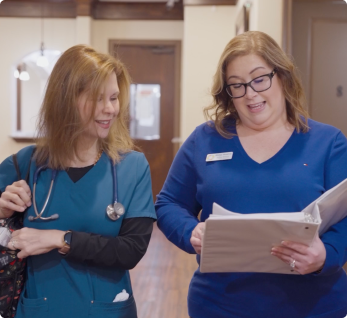
Our team is committed to delivering personalized care for your loved one
Michelle Strong
All Star Hospice
Christian Care House Calls
Testimonials
Carol Rup
Jim Howard
Greg and Cindy Heitzman
Downloadable Resources
We Are Avalon
Discover the heart of our community; download ‘We Are Avalon’ to get to know our dedicated team and our commitment to providing a warm, family-like environment.
Transitional Care Guide
If you’re considering a transition, we’re here to help; download our Transitional Care Guide for compassionate guidance through each step of the process.
Schedule a Tour
Visit one of our 30+ campuses and experience our unique approach to memory care.