
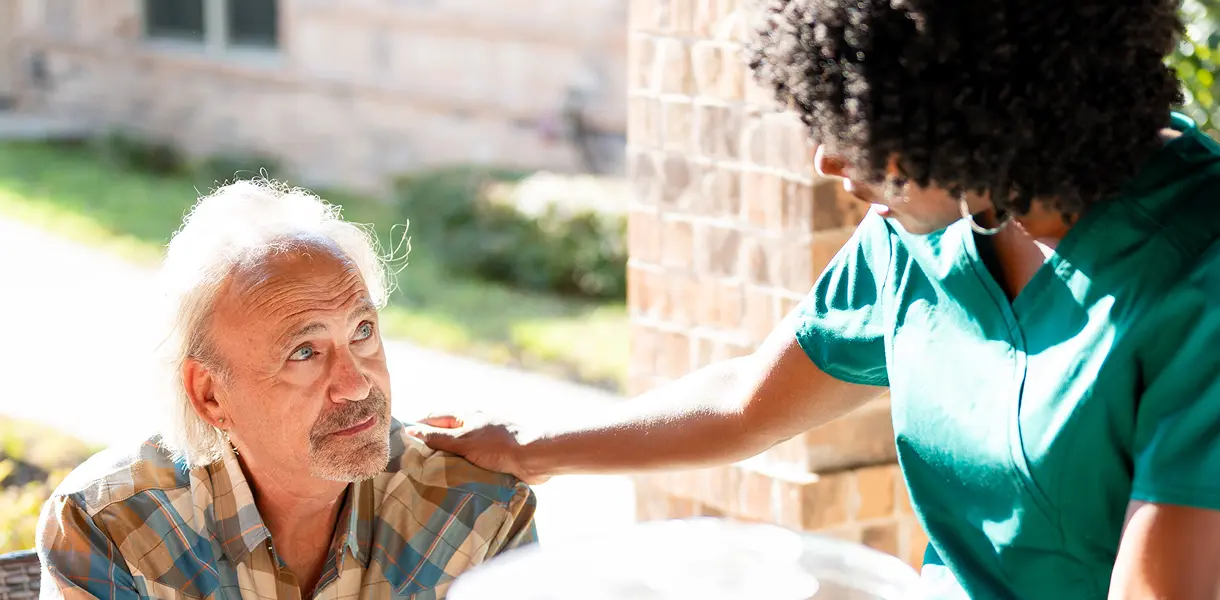
Understanding the Symptoms of Parkinson’s Disease
Parkinson’s Disease is a progressive neurological disorder that affects millions of individuals and their families. April is Parkinson’s Awareness Month, a month dedicated to helping people better understand Parkinson’s.
Because Parkinson’s is a neurodegenerative condition, symptoms often appear gradually. Recognizing early signs can be the key to managing the disease effectively and maintaining a higher quality of life as long as possible.
Common and Early Symptoms
Parkinson’s is most often associated with motor-related issues caused by a loss of dopamine-producing brain cells. These symptoms can be diverse and vary significantly between individuals:
- Tremors or Shaking: This is often the most recognizable sign. It usually begins in a limb, frequently the hand or fingers.
- Bradykinesia (Slowed Movement):Over time, Parkinson’s may slow physical movement, making simple tasks difficult and time-consuming. Steps may become shorter when walking, or it may become difficult to get out of a chair. This slowing down is often mistaken for general aging, but in Parkinson’s, it is a specific neurological progression.
- Stiff Muscles: Muscle stiffness can occur in any part of the body. This rigidity can be painful and limit a person’s range of motion and mobility.
- Impaired Posture and Balance: Posture may become stooped and individuals may experience significant balance problems.
Less Common and Cognitive Symptoms
While motor symptoms are the most visible, Parkinson’s also affects the brain in ways that can lead to cognitive decline:
- Cognitive Impairment: Many families ask, “Does Parkinson’s cause dementia?” While not everyone with Parkinson’s will experience memory loss, some individuals develop Parkinson’s Disease Dementia as the condition progresses. This impacts memory, focus, and judgment, often requiring specialized memory care support.
- Sleep Disorders: Parkinson’s can disrupt the internal “clock.” Individuals often experience insomnia, restless leg syndrome, or REM sleep behavior disorder, where they physically act out vivid or uncomfortable dreams.
- Speech and Writing Changes: Speech may become softer, slurred, or more hesitant. Additionally, a symptom called micrographia may occur, where handwriting becomes abnormally small, cramped, and difficult to read.
At Avalon Memory Care, we provide professional and sensitive care for the physical, emotional, and social needs of those living with Parkinson’s and cognitive impairments. Our family-owned approach focuses on creating a home-like environment where residents can bond with a dedicated care team.
Concerned about your loved one’s cognitive health? Use our Free 5-Minute Memory Assessment Tool to gain a clearer understanding of their current stage.

See More Articles
- Visiting Your Aging Parent With Memory Loss at Avalon Memory Care

As a loving son or daughter, you naturally want the best of care for your senior parent. The compassionate assisted living caregivers at Avalon Memory Care want you to know that while your parent is living with us, he or she will receive nothing less than respectful, loving care within our comfortable, safe, and fully-staffed
- Celebrating New Year’s Day in Memory Care

Families often find that celebrations with their loved ones in memory care are easier when they embrace new traditions. For instance, it may not be practical to expect your loved one to stay up until midnight on New Year’s Eve. Instead, consider throwing a New Year’s Day celebration, complete with a countdown to the first
- Understanding Parkinson’s Disease and Dementia

Parkinson’s disease is an incurable neurological disorder, with progressively worsening complications. Perhaps the most well-known symptom of Parkinson’s is a hand tremor, but it can also cause speech changes, muscle rigidity, and impaired posture. Eventually, as the disease progresses, more than half of all individuals with Parkinson’s will require dementia care. This particular type of
Our team is committed to delivering personalized care for your loved one
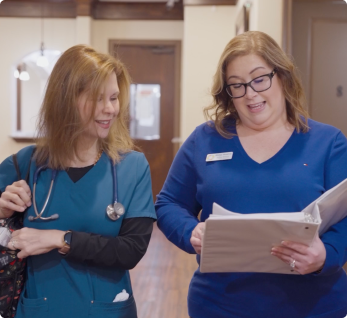
Michelle Strong
All Star Hospice
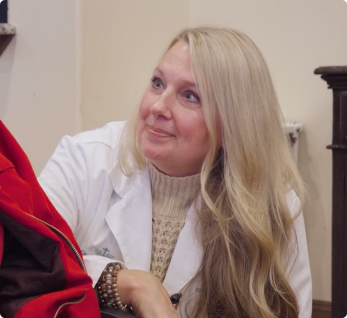
Christian Care House Calls
Testimonials
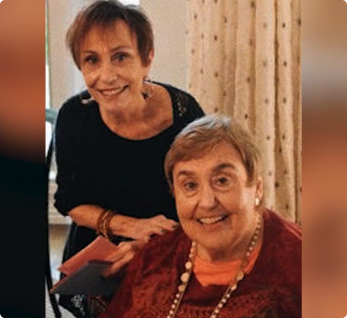
Carol Rup
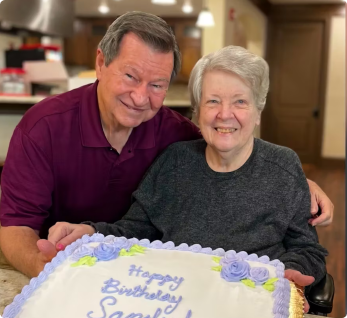
Jim Howard
Greg and Cindy Heitzman
Downloadable Resources
We Are Avalon
Discover the heart of our community; download ‘We Are Avalon’ to get to know our dedicated team and our commitment to providing a warm, family-like environment.
Transitional Care Guide
If you’re considering a transition, we’re here to help; download our Transitional Care Guide for compassionate guidance through each step of the process.
Schedule a Tour
Visit one of our 30+ campuses and experience our unique approach to memory care.