

How to Talk to Your Parent About Moving to Memory Care
Bringing up memory care with a parent can be a sensitive and emotional conversation for families. You want them to feel loved and respected, while making sure they can get the care they need. Here is how we recommend approaching the discussion with compassion, honesty, and patience.
Start Planning for Memory Care Before You Think You Need To
Many families wait until a crisis, like a fall or wandering incident, before having this conversation. If you can, start earlier. If your loved one is still in the early stages of dementia, ask them what matters most to them in a living situation. Their answers can guide you later, even if they don’t remember the conversation.
Choose the Right Moment to Have a Conversation
Timing matters more than most people realize. Pick a calm time of day, ideally when your parent is well rested and not hungry, anxious, or overstimulated. A quiet one-on-one conversation, or a small conversation with one or two trusted family members present, usually goes better than a large group discussion that can feel like an intervention.
Lead With Love, Not Logistics
It’s tempting to open with facts: cost, safety statistics, medication schedules. Save those for later. Start with how much you love them and how much you want them to feel safe, cared for, and supported. Something simple like, “I love you and I want you to have support that helps you feel your best,” sets a tone of care that can lead to better conversations.
Listen More Than You Talk
Your parent may respond with fear, anger, denial, or grief. All of these reactions are normal. Ask what worries them most about the idea. Sometimes the fear is about losing independence, leaving a home full of memories, or just the unknown of moving. You don’t need to solve every concern in one conversation, but it’s helpful to know what worries them about a move. This way you can help them feel more at peace if moving becomes necessary.
Be Honest, But Gentle
Avoid overwhelming your love done with every detail at once. Share information in small, digestible pieces. Focus on what memory care can add to their life like companionship, structured routines, activities, and a home-like environment where they’re not alone.
Expect to Have the Conversation More Than Once
One talk rarely settles everything, especially if memory loss affects how much your parent retains from one day to the next. Be prepared to revisit the conversation gently and patiently, without frustration, as many times as it takes. When communicating with individuals with dementia, remember that repeated reassurance is more effective than repeated argument.
Bring in Support When You Need It
Your parent’s doctor or a memory care team member can help explain the benefits of specialized care in a way that feels less personal and more informational. Sometimes hearing the same message from a medical professional carries a different weight than hearing it from a son or daughter.
At Avalon Memory Care, our team regularly supports families through exactly this kind of transition. We’re happy to talk with you about how to approach the conversation, answer your parent’s questions directly, or simply be a resource as you figure out the right next step. Reach out to learn more.



See More Articles
- Visiting Your Aging Parent With Memory Loss at Avalon Memory Care

As a loving son or daughter, you naturally want the best of care for your senior parent. The compassionate assisted living caregivers at Avalon Memory Care want you to know that while your parent is living with us, he or she will receive nothing less than respectful, loving care within our comfortable, safe, and fully-staffed
- Celebrating New Year’s Day in Memory Care

Families often find that celebrations with their loved ones in memory care are easier when they embrace new traditions. For instance, it may not be practical to expect your loved one to stay up until midnight on New Year’s Eve. Instead, consider throwing a New Year’s Day celebration, complete with a countdown to the first
- Understanding Parkinson’s Disease and Dementia

Parkinson’s disease is an incurable neurological disorder, with progressively worsening complications. Perhaps the most well-known symptom of Parkinson’s is a hand tremor, but it can also cause speech changes, muscle rigidity, and impaired posture. Eventually, as the disease progresses, more than half of all individuals with Parkinson’s will require dementia care. This particular type of
Our team is committed to delivering personalized care for your loved one
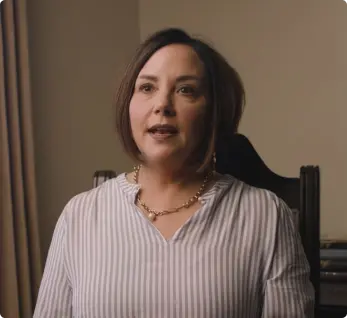
Michelle Strong
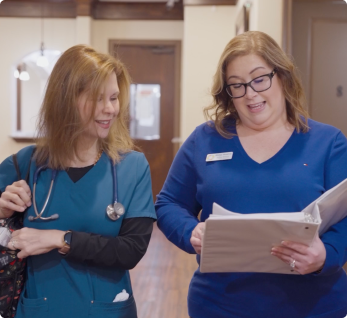
All Star Hospice
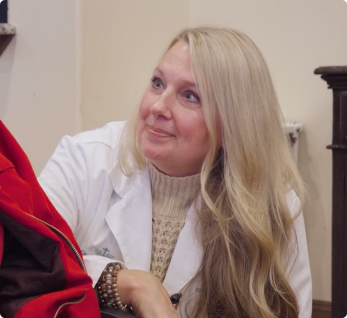
Christian Care House Calls
Testimonials

Carol Rup
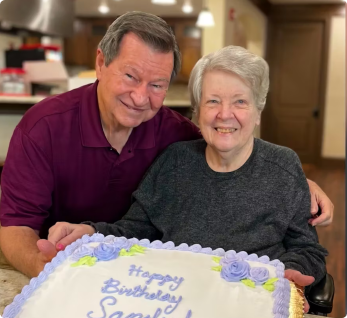
Jim Howard
Greg and Cindy Heitzman
Downloadable Resources
We Are Avalon
Discover the heart of our community; download ‘We Are Avalon’ to get to know our dedicated team and our commitment to providing a warm, family-like environment.
Transitional Care Guide
If you’re considering a transition, we’re here to help; download our Transitional Care Guide for compassionate guidance through each step of the process.
Schedule a Tour
Visit one of our 30+ campuses and experience our unique approach to memory care.